








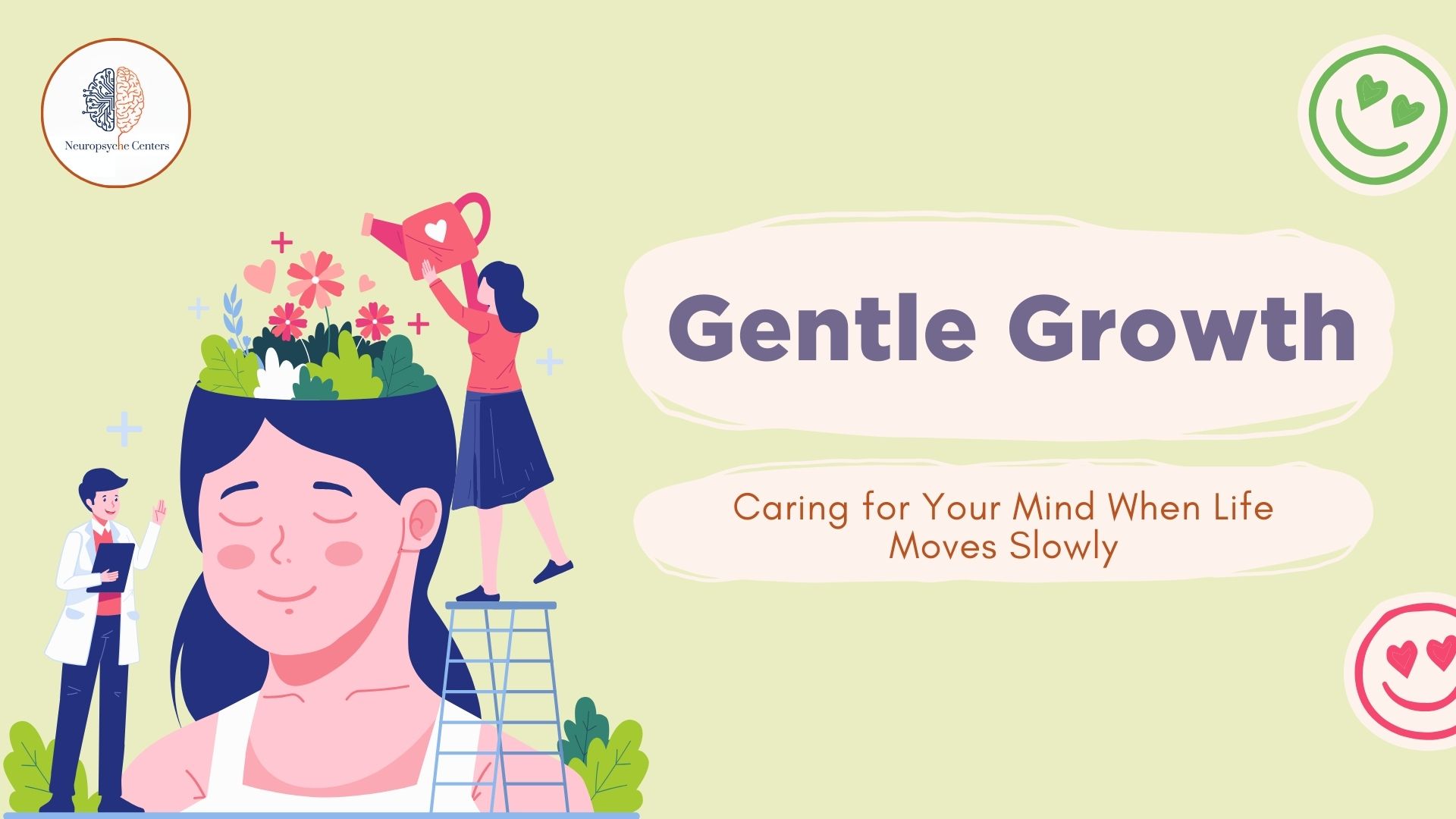
Gentle Growth: Caring for Your Mind When Life Moves Slowly
Waiting for your dreams to unfold can be one of the quietest yet most emotionally demanding experiences of adulthood. We grow up believing life moves in neat stages, education, career, relationships, stability, but reality rarely follows that script. Instead, many of us find ourselves paused between chapters, watching plans stretch longer than expected. These “delayed dreams” don’t always look dramatic from the outside, but internally they can reshape how we think, feel, and relate to ourselves. Prolonged uncertainty is widely recognized as a major contributor to emotional strain, and organizations like the World Health Organization highlight how ongoing stress can quietly affect mental wellbeing over time.
What Are Delayed Dreams, Really?
Delayed dreams aren’t just about missed deadlines – they’re about life milestones that feel stuck on hold.
Common examples include:
- Career delays: not landing the job you trained for, being underemployed, career stagnation, or watching peers advance while you feel stationary
- Financial delays: struggling to save money, postponing independence, supporting family instead of building your own future
- Relationship timelines: being single longer than expected, delaying marriage or parenthood
- Personal growth pauses: burnout, mental health challenges, loss of motivation
- External circumstances: health issues, immigration barriers, family responsibilities, global disruptions
What makes these delays especially heavy is their duration. They often last months or years, creating a sense of living in limbo.
Why It Feels So Heavy on the Mind
Waiting isn’t passive – it requires emotional energy.
Here’s what typically happens psychologically:
- Chronic uncertainty keeps the nervous system on edge, leading to anxiety, irritability, poor sleep, and mental fatigue
- Identity starts to feel unstable, causing people to question their worth or replay past decisions
- Comparison intensifies, especially through social media, making you feel behind in life
- Hidden grief emerges, as you mourn timelines that didn’t happen or versions of yourself that never existed
- Hope and exhaustion coexist, creating emotional burnout
Importantly, most delays are not personal failures. They often come from:
- Structural factors like economic instability or limited opportunities
- Emotional readiness, healing and growth can’t be rushed
- Redirection toward paths that fit better long-term
- Responsibilities or unexpected events that temporarily take priority
Society also hands us invisible deadlines, making us feel late even when we’re simply human. Psychiatrist Viktor Frankl emphasized that humans can endure almost any hardship when they find meaning in it, and meaning becomes especially vital during waiting seasons.
How to Protect Your Mental Health While Dreams Are Delayed
You may not control the timing of your dreams, but you can influence how you move through the waiting. One of the most important steps is separating your self-worth from your timeline, replacing thoughts like “I’m failing” with “I’m in transition,” and reminding yourself that progress isn’t always visible. Creating short-term purpose also helps prevent life from feeling suspended; small daily routines, learning new skills, gentle movement, and creative outlets give your days structure and meaning even when big goals feel far away. Emotional flexibility matters just as much – allow mixed feelings, let yourself be hopeful and tired at the same time, and avoid forcing positivity when what you really need is honesty. Instead of putting everything on pause for one outcome, try designing “parallel lives” by continuing to nurture friendships, explore hobbies, travel when possible, and invest in your health, letting multiple areas of life grow at once. It’s also helpful to reduce comparison triggers by curating your social media, limiting content that makes you feel inadequate, and protecting your emotional space. During waiting seasons, redefining success can be powerful: success may look like staying emotionally present, choosing rest, showing up for yourself, or continuing despite uncertainty. Asking yourself, Who am I becoming right now? can shift your perspective, because waiting often builds resilience, empathy, patience, and depth, qualities that fast success rarely teaches.
The Role of Therapy in Navigating Delayed Dreams
Therapy can be a powerful support when waiting becomes overwhelming. A therapist offers a safe space to explore grief, anxiety, and self-doubt while helping you identify unhelpful thought patterns such as catastrophizing or constant comparison. Therapy also helps with:
- emotional regulation
- rebuilding self-esteem
- clarifying values
- processing disappointment
- creating realistic, flexible life plans
For many people, simply being seen and heard reduces isolation and restores hope. Therapy doesn’t remove delays, but it changes how you experience them, making the waiting gentler and more manageable.
Final Thoughts
Delayed dreams hurt because they touch hope itself. But waiting does not mean wasted time. Even when nothing seems to be moving externally, something meaningful is forming internally. You are not late to your life, you are living it right now. Often, the longest pauses build the strongest foundations, shaping a version of you that is wiser, more grounded, and better prepared for what comes next.