








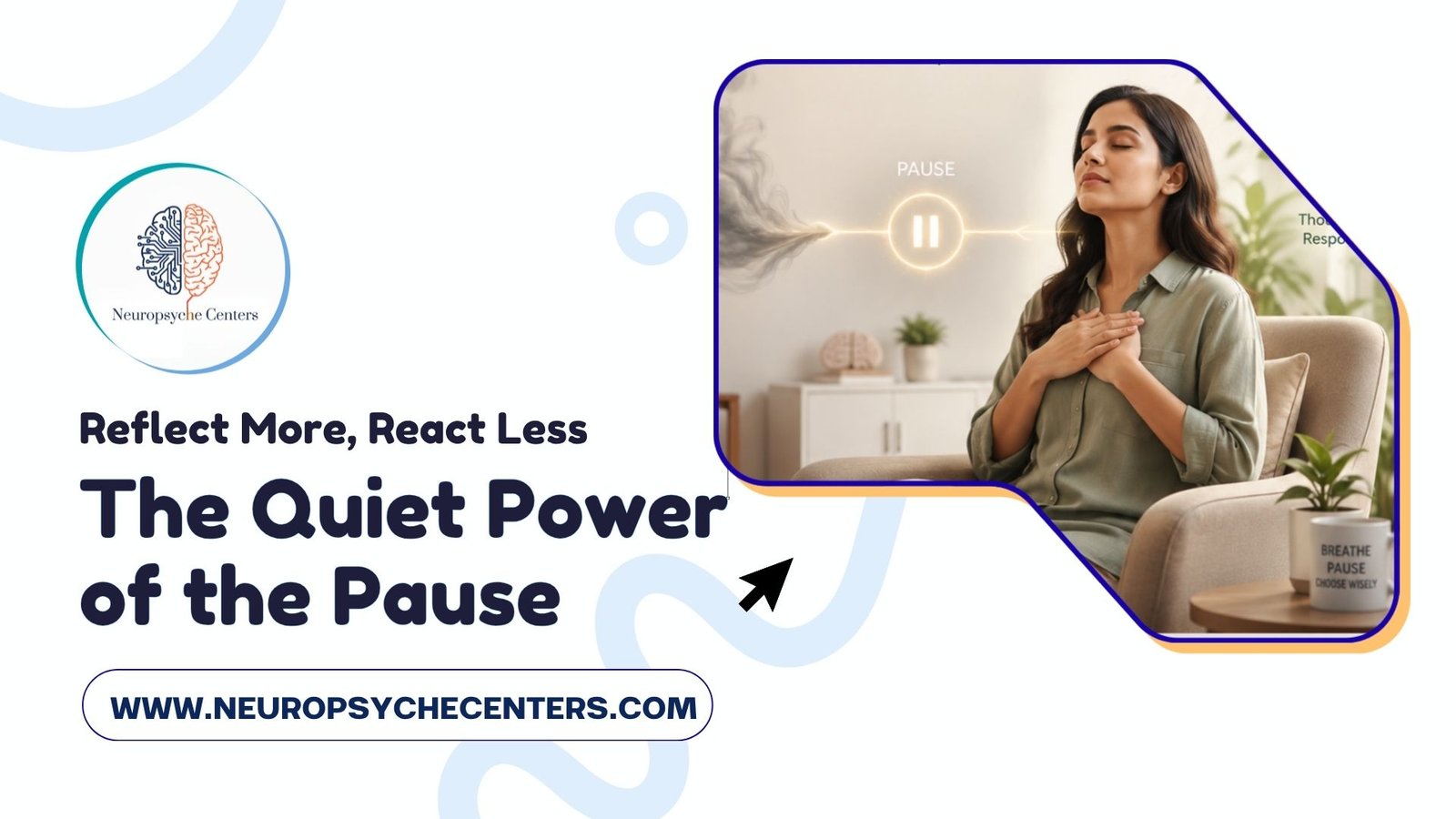
Reflect More, React Less: The Quiet Power ofthe Pause
Somewhere between the ping of a notification and the words “I’ll call you back,” most of us have lost the art of pausing.
We live in a world engineered for instant reaction. A rude email gets an instant reply. A disagreement gets an instant comeback. A stressful moment gets an instant decision. We’ve mistaken speed for strength ,but the truth is, the calmest person in the room is usually the most powerful one in it.
The Cost of Reacting Too Fast
There’s a reason “sleep on it” has survived as advice for centuries. Reaction is fast, cheap, and often driven by whatever emotion is loudest in the moment :anger, fear, embarrassment, pride. Reflection is slower, but it’s driven by something steadier: judgment.
Neuroscientists have long pointed to a simple explanation for this. When we’re triggered, the amygdala , the brain’s alarm system fires before the prefrontal cortex, the part responsible for reasoning, gets a chance to weigh in. That’s not a character flaw. It’s biology. But knowing this gives us a choice: we can either let the alarm drive, or we can wait a few seconds and let reason take the wheel.
A Story Worth Remembering
In 1962, during the Cuban Missile Crisis, the world stood closer to nuclear war than at almost any other point in history. American reconnaissance planes had spotted Soviet missile sites in Cuba, and pressure was mounting on President Kennedy to strike immediately.
Many of his advisors ,seasoned military leaders pushed for an instant military response. It was the “obvious” reaction. But Kennedy chose something harder: he paused. He asked for more time. He gathered more information, considered the consequences of escalation, and eventually chose a naval blockade paired with quiet diplomacy instead of an airstrike.
That pause those extra days of reflection instead of reaction is widely credited with preventing a nuclear war. One decision, made slower and with more thought, changed the direction of history.
You may never face a decision of that scale. But the same principle plays out every day in smaller ways in a heated argument with a partner, a tense email from a boss, a comment that stings. The stakes are different. The lesson isn’t.
Why Reflection Wins
- Reaction is emotional. Reflection is intentional. A reaction is often about relieving your own discomfort in the moment. Reflection asks a better question: what actually helps this situation?
- Reaction burns bridges. Reflection builds them. Words said in anger are rarely words we meant to keep. A pause gives you the chance to respond in a way you won’t need to apologize for later.
- Reaction repeats old patterns. Reflection creates new ones. If you always respond to conflict the same way, you’ll always get the same outcome. A pause interrupts the pattern long enough to choose something better.
How to Build the Habit of Pausing
You don’t need a crisis to practice this. Start small:
- The Ten-Second Rule — Before responding to something upsetting, count to ten. It sounds simple, almost too simple, but it’s often enough time for the emotional spike to settle.
- Write it, don’t send it — If you’re angry, write the message. Then close the laptop. Revisit it an hour later. You’ll almost always edit it or delete it entirely.
- Ask one question — Before reacting, ask: “Will this matter in a week? A year?” It reframes urgency into perspective.
- Breathe before you speak — One slow breath activates the parasympathetic nervous system, quite literally calming your body down before your mouth catches up with your emotions.
Final Thought
Not every fire needs to be put out with water thrown in haste. Sometimes, the wisest response is simply ,not yet.
The next time life hands you a reason to react instantly, try this instead: pause. Breathe. Think. Then respond.
Because in a world addicted to speed, the ability to slow down isn’t weakness.
It’s mastery.