








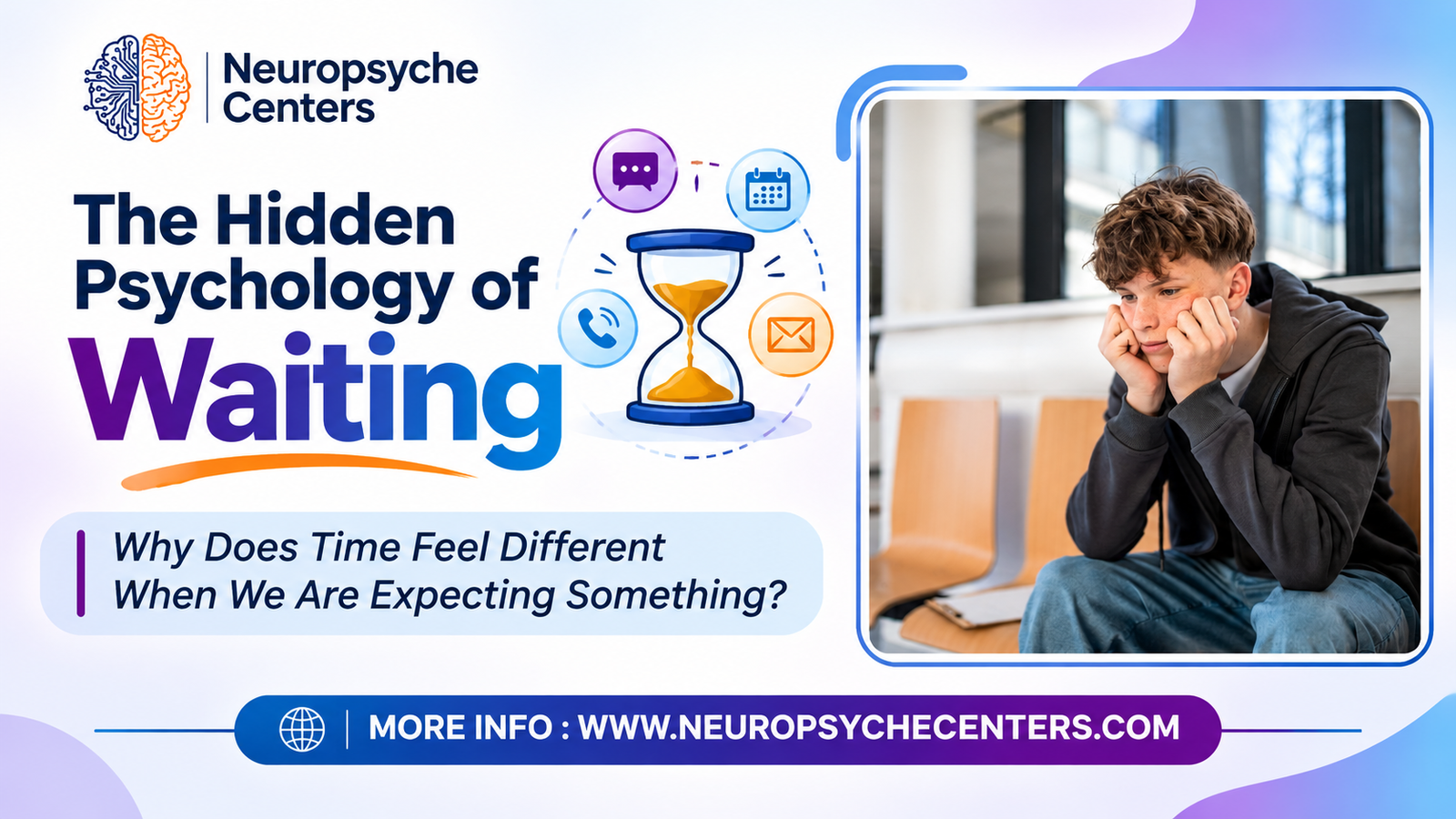
The Hidden Psychology of Waiting: Why Does Time Feel Different When We Are Expecting Something?
Have you ever waited for an important phone call, examination result or job interview outcome and felt as though time was moving unusually slowly? Yet, when you are watching your favourite movie or enjoying a conversation, hours can pass without you noticing.
Interestingly, the same amount of time can feel completely different depending on our thoughts, emotions and experiences. This psychological phenomenon is known as subjective time perception. It explains why five minutes can feel like forever when we are anxious, but disappear quickly when we are engaged in something enjoyable.
Waiting becomes particularly difficult when something matters to us, but the outcome remains uncertain or outside our control.
What Is Subjective Time Perception?
Subjective time perception refers to how individuals mentally experience and estimate the passage of time. Unlike clock time, which remains relatively constant, our psychological experience of time changes depending on several factors, including attention, anticipation, emotional arousal and uncertainty.
For example, waiting for an important medical report may feel much longer when you continuously check the clock. Similarly, waiting for a message from someone important can create restlessness and repeated thoughts about when they might respond.
The interesting question is not simply, “Why is time moving so slowly?” but rather, “What is happening psychologically while I am waiting?”
Why Does Waiting Feel So Difficult?
Several psychological processes influence how we experience waiting.
1. Attention and Time Monitoring
When we are waiting for something important, our attention often shifts towards monitoring time. We repeatedly check our phones, look at the clock or wonder how long we have been waiting.
The more attention we give to the passage of time, the more noticeable each minute may become.
2. Anticipation and Expectations
Anticipation refers to the psychological process of expecting something that may happen in the future.
Before receiving examination results or an interview decision, we may repeatedly imagine different outcomes. Thoughts such as “What if I get selected?” or “What if things do not go as planned?” can occupy our attention and make waiting emotionally exhausting.
3. Uncertainty and Anxiety
Waiting becomes particularly uncomfortable when we do not know what will happen or when it will happen.
An uncertain response from an organisation may create more restlessness than waiting for a result with a clearly communicated announcement date.
The mind may repeatedly generate possible outcomes, increasing worry and emotional tension.
4. Emotional Arousal
Emotional arousal refers to the level of psychological and physiological activation associated with an emotional experience.
Excitement, nervousness, anxiety and worry can influence our perception of time. When emotions become intense, we may become more conscious of the waiting period.
5. Flow and Absorption
When we become deeply involved in an enjoyable activity, our attention shifts away from monitoring time. This experience is associated with flow.
For example, reading, painting, playing sports or working on an interesting project can make hours pass without our awareness.
Common Signs of Waiting-Related Anxiety
Some common experiences include:
- Frequently checking your phone for important messages.
- Repeatedly looking at the clock.
- Imagining different positive and negative outcomes.
- Feeling restless when an expected response is delayed.
- Finding it difficult to concentrate on other activities.
- Experiencing sleep disturbances due to anticipatory thoughts.
- Feeling temporary relief after receiving expected information.
These experiences are common and do not automatically indicate a psychological disorder. However, persistent distress that affects everyday functioning deserves attention.
How Can We Manage the Psychology of Waiting?
Developing healthier responses to uncertainty can make waiting more manageable.
1. Reduce Repeated Checking
Instead of continuously checking your phone, decide specific times to look for updates. This can prevent unnecessary attention from remaining focused on waiting.
2. Shift Your Attention
Engage in meaningful activities such as reading, exercising, listening to music or completing everyday responsibilities.
3. Challenge Negative Predictions
When you imagine an unfavourable outcome, ask yourself whether you have actual evidence or are anticipating something that may never happen.
4. Practise Accepting Uncertainty
Not every situation provides immediate answers. Remind yourself that you do not need to know the outcome right now.
5. Break Waiting Periods into Smaller Activities
Rather than spending an entire afternoon waiting for a call, organise your time around manageable tasks and activities you enjoy.
Try This: The “Waiting Without Worrying” Exercise
The next time you find yourself repeatedly checking your phone, pause and reflect:
- What am I waiting for? Identify the event or information you are expecting.
- What am I thinking? Notice whether you are imagining negative outcomes or repeatedly seeking reassurance.
- What do I need right now? Choose something that helps you remain engaged in the present.
For example, if you are waiting for an interview result, remind yourself that the decision is not entirely within your control. Focus on another meaningful activity instead of repeatedly checking your messages.
When Should You Consult a Psychologist or Psychiatrist?
Occasional nervousness while waiting is a normal human experience. However, professional support may be helpful if you:
- Experience persistent anxiety around everyday uncertainties.
- Frequently imagine negative outcomes.
- Find it difficult to concentrate because of anticipatory worry.
- Experience sleep disturbances due to waiting-related thoughts.
- Repeatedly seek reassurance or check messages.
- Feel emotionally overwhelmed when responses are delayed.
- Notice that anxiety affects your relationships, work or studies.
A psychologist or clinical psychologist can help identify unhelpful thinking patterns and develop healthier strategies for managing uncertainty.
A psychiatrist can assess persistent or significant anxiety symptoms and determine whether psychiatric treatment may be appropriate.
At Neuropsyche Centers, professional guidance can help individuals understand emotional difficulties and develop healthier coping strategies.
You Cannot Control Every Moment of Waiting, But You Can Decide How You Spend It
Waiting is an unavoidable part of life. We wait for opportunities, important decisions, medical reports, examination results and conversations that matter deeply to us.
There is nothing wrong with looking forward to something or feeling nervous about an uncertain outcome.
But you do not have to put your entire life on hold while waiting.
You can hope for something without continuously checking for it. You can experience uncertainty without imagining every possible negative outcome.
Sometimes, the most important thing to remember is that life continues even while we are waiting for something to happen.