








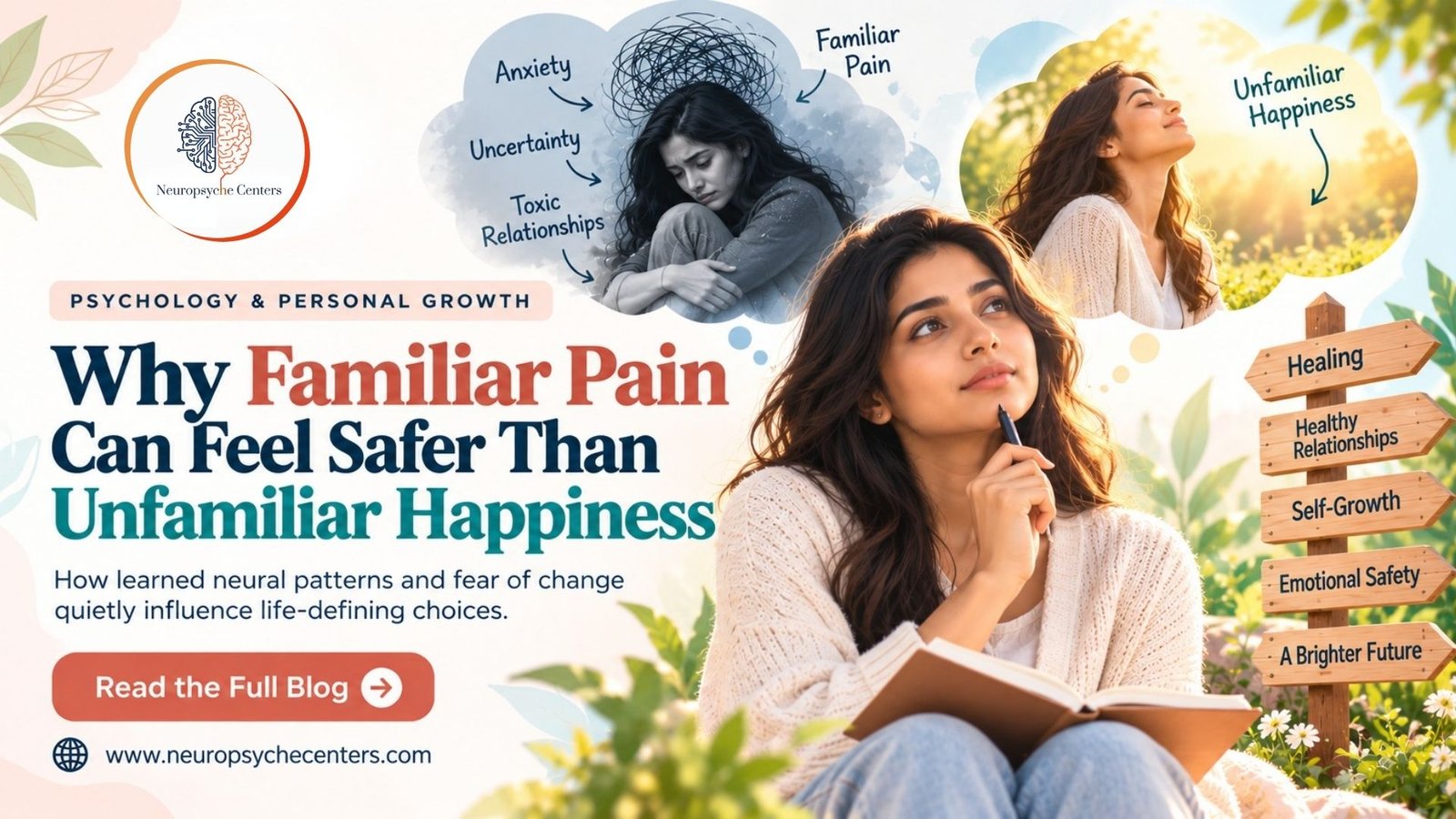
Why Familiar Pain Can Feel Safer Than Unfamiliar Happiness
Understanding How Past Experiences and Fear of Change Influence Our Choices
Have you ever wondered why you feel uncomfortable when something good finally happens in your life? You may find yourself questioning a healthy relationship, expecting disappointment, or feeling drawn toward situations that have caused you pain before.
Sometimes, the problem is not that we want to suffer. It is that what feels familiar can seem safer than what is unfamiliar—even when the familiar has been hurting us.
Understanding this pattern can be the first step toward building healthier relationships and emotional well-being.
1. Why Can Familiar Pain Feel Like Safety?
Consider Maya, who spent three years in an emotionally distant relationship. She often felt lonely, anxious, and misunderstood. Yet, when she finally ended the relationship and met someone kind, attentive, and communicative, she struggled to feel comfortable.
She questioned her new partner’s intentions and waited for something to go wrong. Maya was not necessarily missing her previous relationship. She may have been adjusting to a kind of emotional stability that felt unfamiliar.
Several psychological patterns can help explain this experience.
Predictability and comfort: The mind often relies on familiar patterns to anticipate what might happen next. Even an unpleasant situation can feel easier to navigate when you know what to expect.
Negative beliefs about yourself: If you have learned to believe that you are unworthy of love or acceptance, receiving genuine care may conflict with those beliefs. This discomfort can make it difficult to trust positive experiences.
Learned stress responses: Growing up around unpredictability or experiencing difficult relationships can influence how you respond to closeness, conflict, and emotional safety. Calmness may initially feel strange when you are accustomed to tension.
Fear of vulnerability: A familiar situation can create an illusion of control. Allowing yourself to trust someone or accept happiness requires uncertainty, openness, and the possibility of disappointment.
These patterns are not universal, and they do not mean that everyone who struggles with healthy relationships has experienced trauma. Personal history, beliefs, and circumstances all matter.
2. Signs You May Be Repeating Familiar Patterns
You may notice some of these behaviours in your relationships or everyday life:
- Pulling away when a relationship begins to feel stable.
- Feeling anxious or suspicious during peaceful moments.
- Mistaking emotional intensity for love or connection.
- Expecting negative outcomes even when things are going well.
- Remaining in draining situations because they feel predictable.
- Finding it difficult to accept kindness, appreciation, or support.
Recognising these patterns does not mean blaming yourself. It creates an opportunity to understand your reactions with greater compassion.
3. How to Break the Cycle
Learn to tolerate calmness. When life feels peaceful, resist the urge to search immediately for a hidden problem. Allow yourself to experience the moment without needing to predict everything that might happen.
Question your emotional reactions. When anxiety appears in a healthy situation, ask yourself, “Am I responding to what is happening now, or could a past experience be influencing how I feel?”
Separate intensity from connection. Healthy relationships can include excitement and passion, but they also allow room for consistency, respect, communication, and emotional safety.
Challenge negative beliefs. If you repeatedly think you are unworthy of love or that happiness never lasts, examine the evidence rather than treating these thoughts as facts.
Practise self-compassion. Familiar coping patterns may have helped you navigate difficult circumstances in the past. You can appreciate how you survived while learning new ways to respond.
4. Try This: The Safety vs. Familiarity Exercise
Take a few minutes to reflect in a journal.
- Identify: Write down a positive situation that makes you feel uneasy or distant.
- Explore: Ask yourself what past experience this feeling reminds you of.
- Evaluate: Consider whether your discomfort reflects a present concern or an old expectation.
- Reframe: Write, “This feels unfamiliar, but unfamiliar does not automatically mean unsafe. I can take my time learning to trust what is healthy.”
Remember, discomfort should not automatically be dismissed. Pay attention to actual warning signs, respect your boundaries, and allow trust to develop gradually.
5. When Should You Seek Professional Support?
If you repeatedly find yourself in destructive relationships, experience intense anxiety when things are going well, or struggle with the effects of difficult past experiences, consider speaking with a qualified mental health professional.
Psychotherapy can help you explore learned beliefs, understand emotional responses, and practise healthier ways of relating to yourself and others. Depending on your needs, a therapist may recommend approaches such as Cognitive Behavioural Therapy (CBT) or trauma-focused treatment.
Final Thoughts
You do not have to remain connected to pain simply because it feels familiar. Learning to accept stability, kindness, and emotional safety may take time, patience, and support.
You deserve relationships and experiences that offer more than survival. You deserve the opportunity to feel safe, valued, and genuinely happy.