








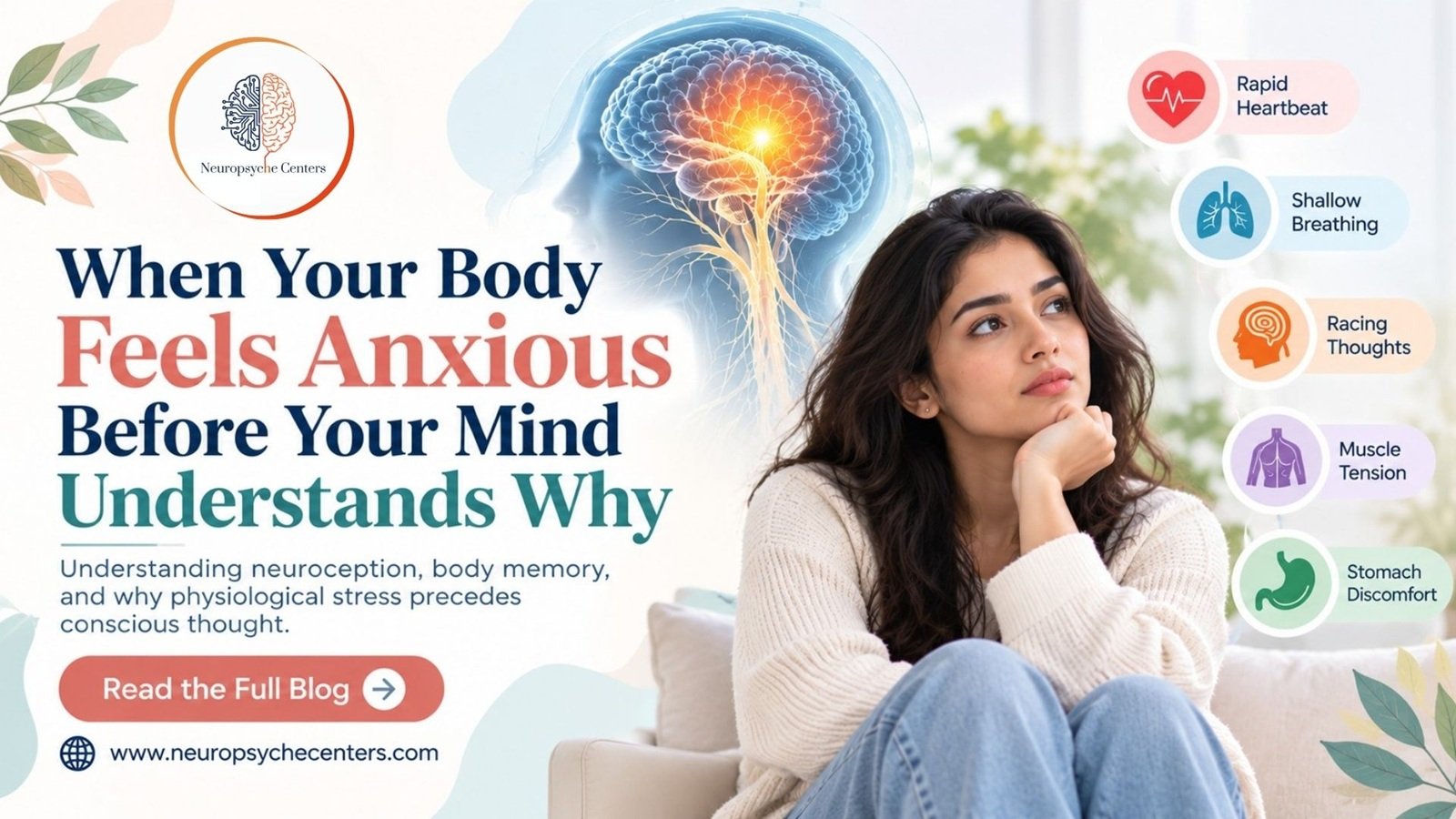
When Your Body Feels Anxious Before Your Mind Understands Why
Understanding Somatic Anxiety, Body Memory, and the Nervous System
Have you ever been sitting peacefully at your desk or walking into a routine meeting when your heart suddenly starts racing? Perhaps your chest feels tight, your palms become sweaty, or a knot forms in your stomach—even though nothing appears to be wrong.
You may find yourself asking, “Why am I anxious? I’m perfectly safe.”
This experience can be associated with somatic anxiety, in which anxiety is experienced through physical sensations before you consciously understand what might be triggering them. Your body may react to perceived danger before your mind identifies a clear reason.
Why Does the Body React Before the Mind?
Your nervous system constantly processes information to help you respond to your surroundings. Several mechanisms can contribute to physical stress responses.
1. The Brain’s Emotional Alarm System
The amygdala plays an important role in processing emotional significance and potential threats. Emotional and sensory processing can begin before conscious awareness fully develops. Consequently, your body may respond before you have had time to evaluate a situation logically.
2. Neuroception: Detecting Safety and Threat
Psychologist Stephen Porges introduced the term neuroception to describe the nervous system’s subconscious evaluation of cues associated with safety, danger, or life-threatening situations. A person’s tone of voice, posture, or surroundings may influence how safe a situation feels, even when no obvious threat is present.
3. Learned Responses and Body Memory
Past stressful experiences can shape how you respond to particular situations, sounds, smells, or interpersonal interactions. A familiar cue may trigger tension or anxiety because your brain has associated it with an earlier stressful experience.
4. The Autonomic Stress Response
When your body perceives a threat, the sympathetic nervous system can increase alertness, heart rate, and breathing. Stress hormones, including adrenaline and cortisol, are involved in these responses. These physical changes may occur without conscious intention.
Common Physical Signs of Subconscious Anxiety
Somatic anxiety can appear in different ways, including:
- Rapid, shallow breathing or unintentionally holding your breath.
- Muscle tension in your jaw, shoulders, neck, or back.
- Stomach discomfort, nausea, or a sudden feeling of uneasiness.
- Sweaty palms, cold hands, or unexpected sensations of heat.
- Repeatedly searching your thoughts for an explanation for your discomfort.
These symptoms can have several causes, including physical health conditions. Persistent or new symptoms should not automatically be attributed to anxiety.
Five Ways to Help Your Body Feel Calmer
1. Start with your physical sensations. Instead of forcing yourself to think positively, gently relax your muscles, adjust your posture, and allow your breathing to slow naturally.
2. Try a slow exhale. Breathe in comfortably through your nose and exhale slowly through your mouth. Repeat several times without forcing deep breaths.
3. Notice your surroundings. Look around and name three objects you can see. Pay attention to the room, the ground beneath your feet, and the support of your chair.
4. Release muscle tension. Gently tighten your fists or shoulders for a few seconds, then relax them. Notice the difference between tension and release.
5. Respond with self-compassion. Remind yourself, “My body is experiencing a stress response. I can pause and understand what I need.”
Try This: A Three-Minute Grounding Exercise
When anxiety appears unexpectedly, try the following:
- Unclench: Relax your jaw, lower your shoulders, and loosen your abdomen.
- Ground: Place both feet flat on the floor and notice the support beneath you.
- Observe: Identify three things you can see and two sensations you can feel.
Move through each step gently, without pressuring yourself to feel calm immediately.
When Should You Seek Professional Support?
If unexplained physical anxiety becomes frequent, develops into repeated panic attacks, causes persistent exhaustion, or interferes with work, relationships, or social activities, consider consulting a qualified psychologist or psychiatrist.
Approaches such as Cognitive Behavioural Therapy (CBT) and appropriate trauma-focused therapies may help you understand triggers and develop healthier coping strategies. A healthcare professional can also assess whether medical factors contribute to your symptoms.
Seek urgent medical attention for severe or new chest pain, significant breathing difficulty, or other potentially serious physical symptoms rather than assuming they are anxiety-related.
Final Thoughts
Your body and mind constantly communicate, and sometimes physical sensations appear before you understand their cause. Instead of blaming yourself for feeling anxious, approach these experiences with curiosity, patience, and compassion.
Understanding your body’s signals is a meaningful step toward emotional awareness, resilience, and better mental health.