








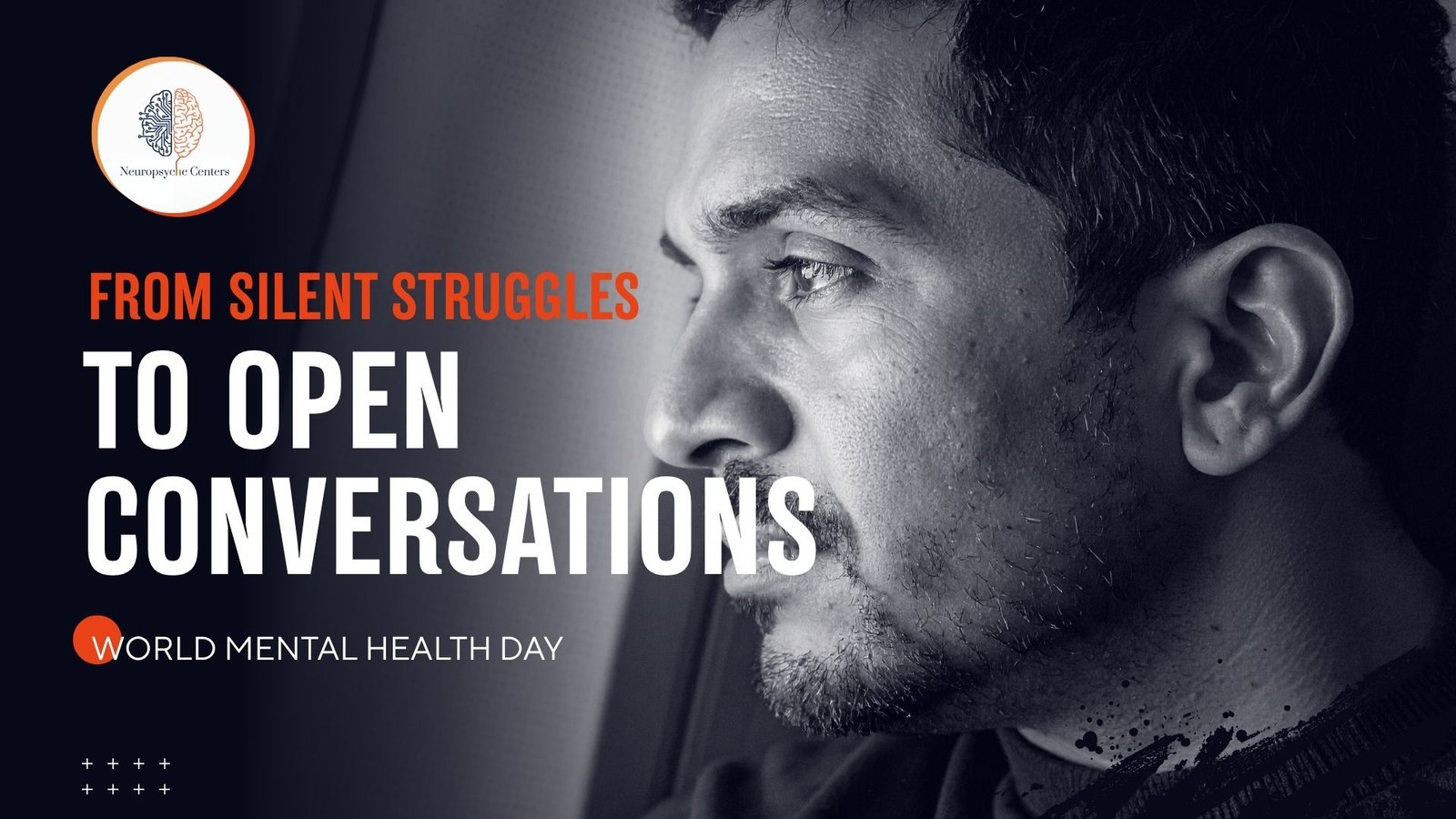
From Silent Struggles to Open Conversations
There was a time when someone feeling constantly worried was simply told to “stop overthinking,” a teenager struggling at school was called “lazy,” a parent feeling emotionally exhausted was expected to “manage the family,” and a person going through a difficult phase in a relationship was advised to “adjust.” Emotional suffering was often invisible because people had very few words for it. Today, conversations around anxiety, depression, burnout, loneliness, trauma and emotional exhaustion have entered homes, schools, workplaces and social media. This may look like a sudden mental-health crisis, but it is more accurate to see it as a combination of greater awareness and greater recognition of problems that were often overlooked or kept private.
Our everyday lives have changed in many ways. We live with constant notifications, information overload, academic competition, career uncertainty, financial pressures, changing family structures, relationship difficulties and the pressure to remain productive. A person can be physically sitting with their family while mentally being connected to hundreds of other lives through a screen. Social media can create connection, but it can also expose people to comparison, criticism and an endless stream of information. The growing willingness to speak about these experiences has also helped many people realise that what they once considered a personal weakness may deserve understanding and support.
From Childhood to Adulthood, Every Age Has Its Own Invisible Load
Mental health does not belong to one particular age group. A child may struggle with separation, bullying, academic pressure or difficulty expressing emotions. A teenager may be navigating identity, friendships, social acceptance, examinations and an increasingly digital world. WHO estimates that one in seven people aged 10 to 19 globally experiences a mental disorder, making adolescence an especially important period for emotional support and early intervention. Young adulthood brings another set of pressures: choosing a career, finding financial independence, building relationships and trying to understand who one wants to become.
In the middle years, the emotional load can look different- work responsibilities, parenting, marriage, caregiving and financial commitments can leave people feeling that they must always be strong for everyone else. Later in life, people may experience retirement, changing family roles, loneliness, physical health concerns or the loss of people they love. So, while some age groups may experience particular vulnerabilities, there is no single age at which mental health becomes “most important.” Every stage of life has its own emotional challenges, and every stage deserves understanding, connection and appropriate support. Sometimes the person who needs support is not the one visibly struggling, it may be the person who has become unusually quiet, constantly tired, increasingly irritable or simply stopped enjoying things they once valued.
A Healthier Mind Is Built in Ordinary Moments
Mental wellbeing is rarely created through one dramatic transformation. It is built through small decisions repeated in ordinary days. We often wait for a holiday, a weekend, a new year or a major life change to take care of ourselves, while our minds are asking for small moments of care every day.
A few everyday habits can make mental wellbeing a regular part of life:
- Give your mind time to rest: Maintain a consistent sleep routine and give yourself a few quiet breaks each day away from work, studies, and constant phone notifications.
- Move your body: Regular physical activity, even a walk, can become a simple way of supporting overall wellbeing.
- Stay connected: Make time for genuine conversations with family, friends or people you trust. Human connection is more than being constantly available online.
- Create space between you and your thoughts: Journaling, mindfulness, breathing exercises or simply sitting quietly for a few minutes can help you slow down and notice what is happening internally.
- Protect your boundaries: You do not have to respond to every message, solve every problem or be available to everyone all the time.
- Make room for meaning: Hobbies, creativity, nature, learning, helping others or activities that give you a sense of purpose can add emotional balance to everyday life.
- Know when to seek support: When emotional difficulties persist or begin affecting sleep, relationships, studies, work or daily functioning, talking to a mental-health professional can be an important form of self-care.
A healthier routine does not mean feeling positive every day. Difficult emotions are a normal part of being human. The goal is to develop healthier ways of understanding and responding to them, while recognising when additional support is needed. Sometimes taking care of your mental health simply means giving yourself permission to pause before you reach the point of exhaustion.
A Better World Begins With How We Treat One Another
Perhaps the biggest mental-health intervention is something that cannot be prescribed, the way we treat people. A healthier world does not require everyone to become a therapist. It requires parents who listen before judging, teachers who recognise distress alongside academic performance, workplaces that understand that employees are human beings rather than machines, friends who check in when someone becomes unusually quiet, and families where asking for help is treated as a responsible choice rather than a weakness.
It also means creating communities where people can access reliable mental-health information and appropriate professional support without shame. We may not always know what someone is carrying behind their smile, silence, productivity or everyday routine. The student who appears distracted, the colleague who always says “I’m fine,” the parent who seems irritable, the friend who has gradually withdrawn, or the older person who has stopped participating in activities may all be experiencing something that we cannot see.
World Mental Health Day is therefore more than a date on the calendar. It is a reminder that mental health belongs in our everyday conversations, not only when someone reaches a crisis point. From the child learning to understand emotions to the teenager searching for identity, from the young adult building a future to the parent carrying multiple responsibilities, and from the working professional trying to keep up to the older adult adapting to change, every person deserves a life in which emotional wellbeing is valued alongside physical health. A mentally healthier world will not be created by eliminating every problem. It will be created by building a world where people do not have to face every problem alone.
A Thought to Carry Forward
This World Mental Health Day, perhaps the change we need begins with something simple, “listen a little longer, judge a little less, check in a little more, and remember that behind every age, role and responsibility is a human being who also needs care.”